honest work
benchmarking congressional stock trades against the s&p 500
I've always assumed that Members of Congress trade with insider information with absolutely no consequences and beat the market. It seems obvious. I've seen finance/investment "gurus" on Instagram advise people to just follow their behavior.
But is it actually true?
I pulled every disclosed stock trade by sitting members of Congress. A total of 30,300 buy and sell transactions spanning 14 years, to which I compared how they performed against the S&P 500.
The Data
Under the STOCK Act of 2012, members of Congress must disclose stock transactions within 45 days. These filings are public. I collected them from three sources and cross-referenced with 13 years of daily stock prices.
For each trade, I looked up the stock price on the trade date, then measured what happened 30, 90, and 180 days later. Alpha is a performance measure against the S&P 500 over the same period.
The Verdict
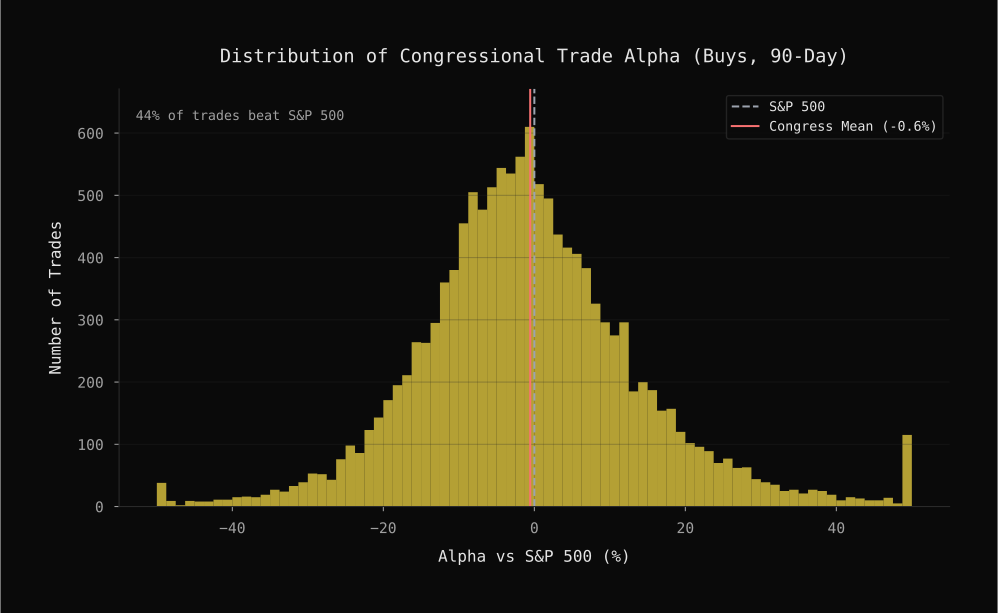
Surprised to find that they don't beat the market. On average, stocks that members of Congress buy underperform the S&P 500. Not by a lot, but consistently. Only 44% of their buy trades beat the index over 90 days.
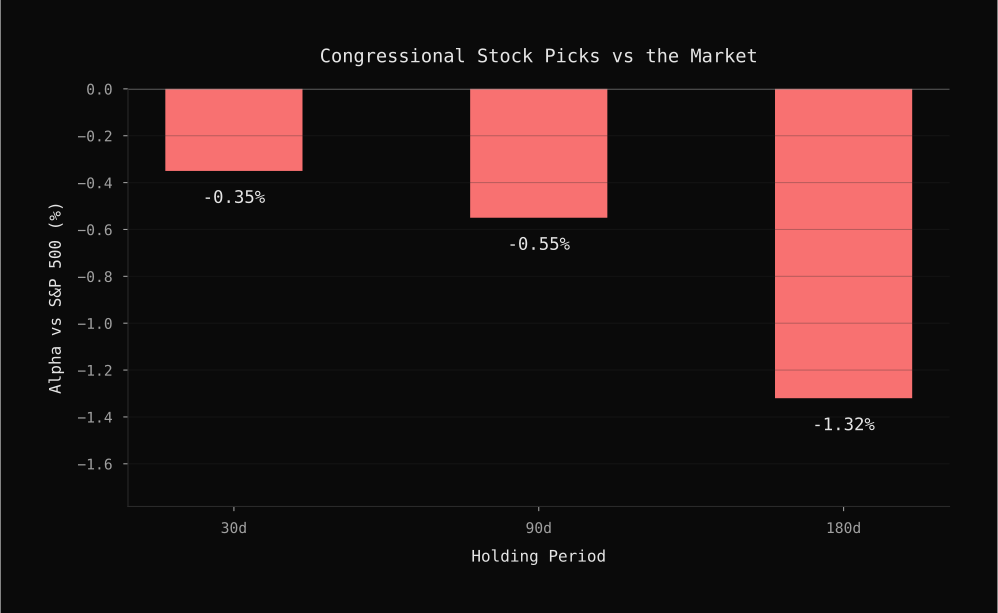
The median is worse: −1.47%. The mean is pulled up by a few outsized wins. Generally, Congress is a slightly below-average stock picker.
The Senate Edge
Break it down by chamber and a clear gap emerges. House members' buys underperform by −0.73% at 90 days. Senators stay essentially flat; fractionally positive.
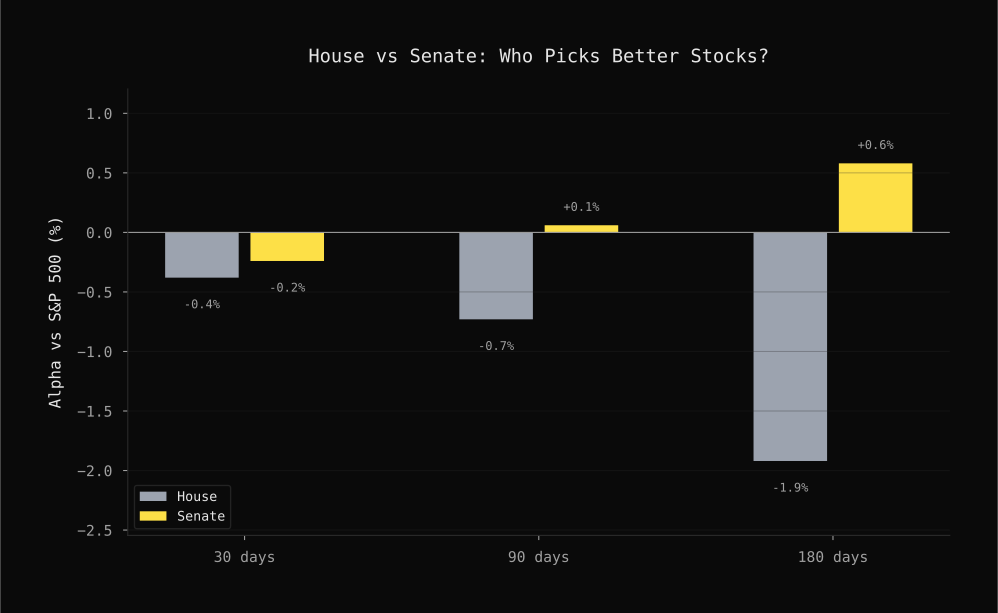
At 180 days, Senate buys actually beat the market by +0.58%. This gap is consistent across time periods. My assumption would be senators serve on broader committees with earlier access to macro-level policy information. But it could also just be that a smaller sample of wealthier people have better financial advisors.
The Committee Edge
I mapped every member's committee assignments to GICS sector classifications, then tagged each trade based on whether the stock's sector falls within that member's committee jurisdiction.
A member of the Energy Committee who buys oil stocks would be considered "overlapping" trade. Whereas if that member buys a tech stock it's "non-overlapping."
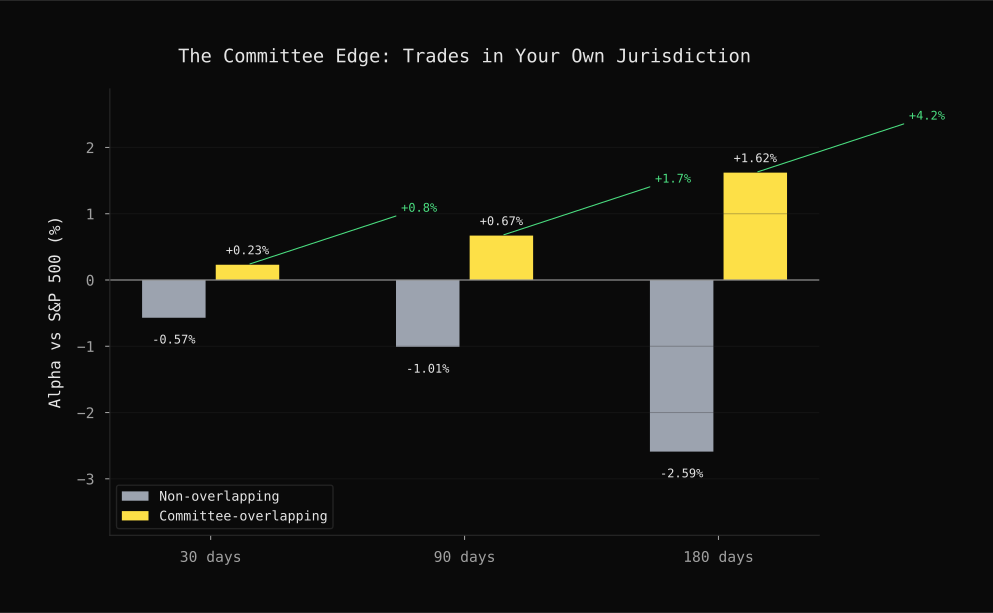
In fact, overlapping buys are the only group that actually beats the S&P 500: +0.67% at 90 days, +1.62% at 180 days. Every other slice of the data is negative.
This doesn't prove insider trading. Committee members naturally know more about the industries they regulate. But the pattern is hard to ignore. The information advantage, if it exists, lives exactly where you'd expect it to.
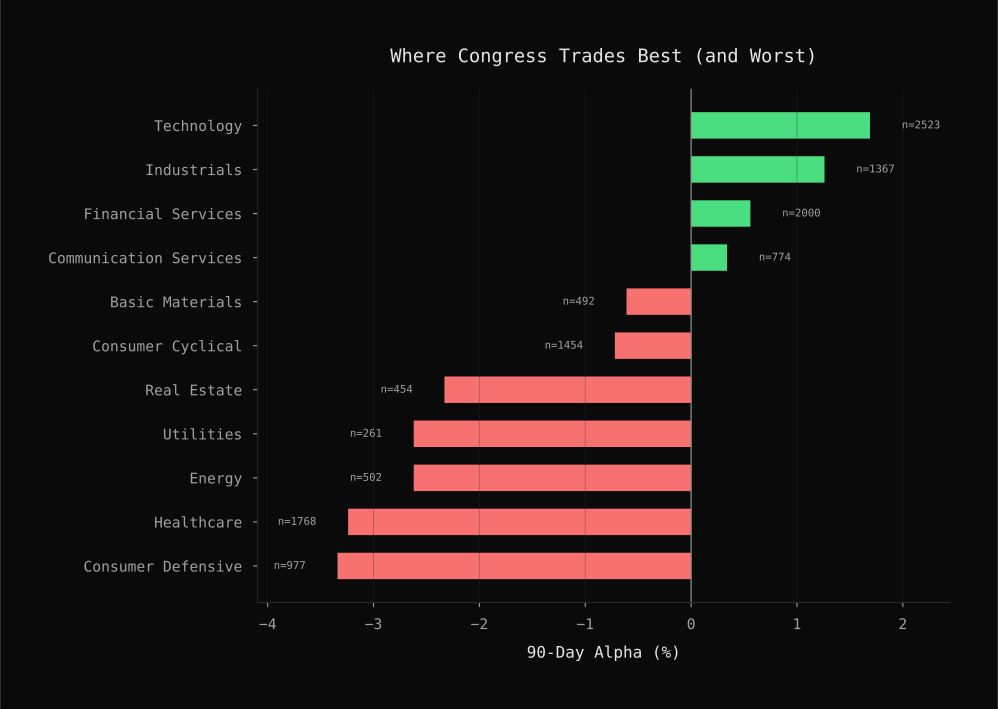
Where They Trade Best
Congress does best in tech and industrials. Healthcare and consumer defensive stocks are where they lose the most. If they're trading on information, it's apparently not from the Health Committee.
The COVID Spike
Congressional stock-picking alpha has been roughly flat to negative over time except 2020. During the early months of COVID, several senators (most notoriously, Richard Burr) sold stocks after classified briefings about the pandemic's severity weeks before the market crashed.
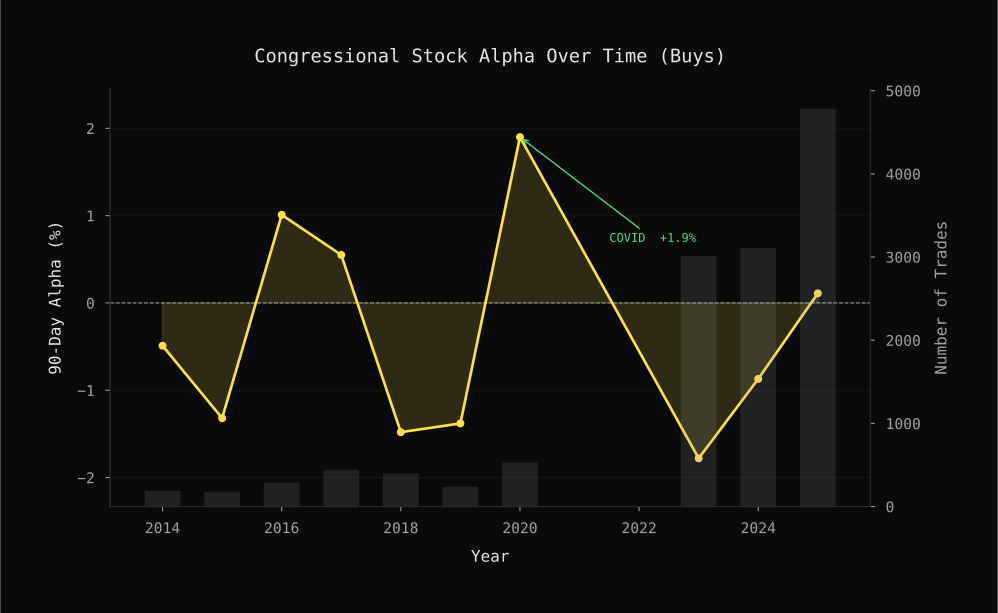
The 2020 spike (+1.9% average alpha) is the only year where Congress clearly beat the market. The bar chart in the background shows trade volume — activity has surged in recent years, likely driven by increased public scrutiny.
The Leaderboard
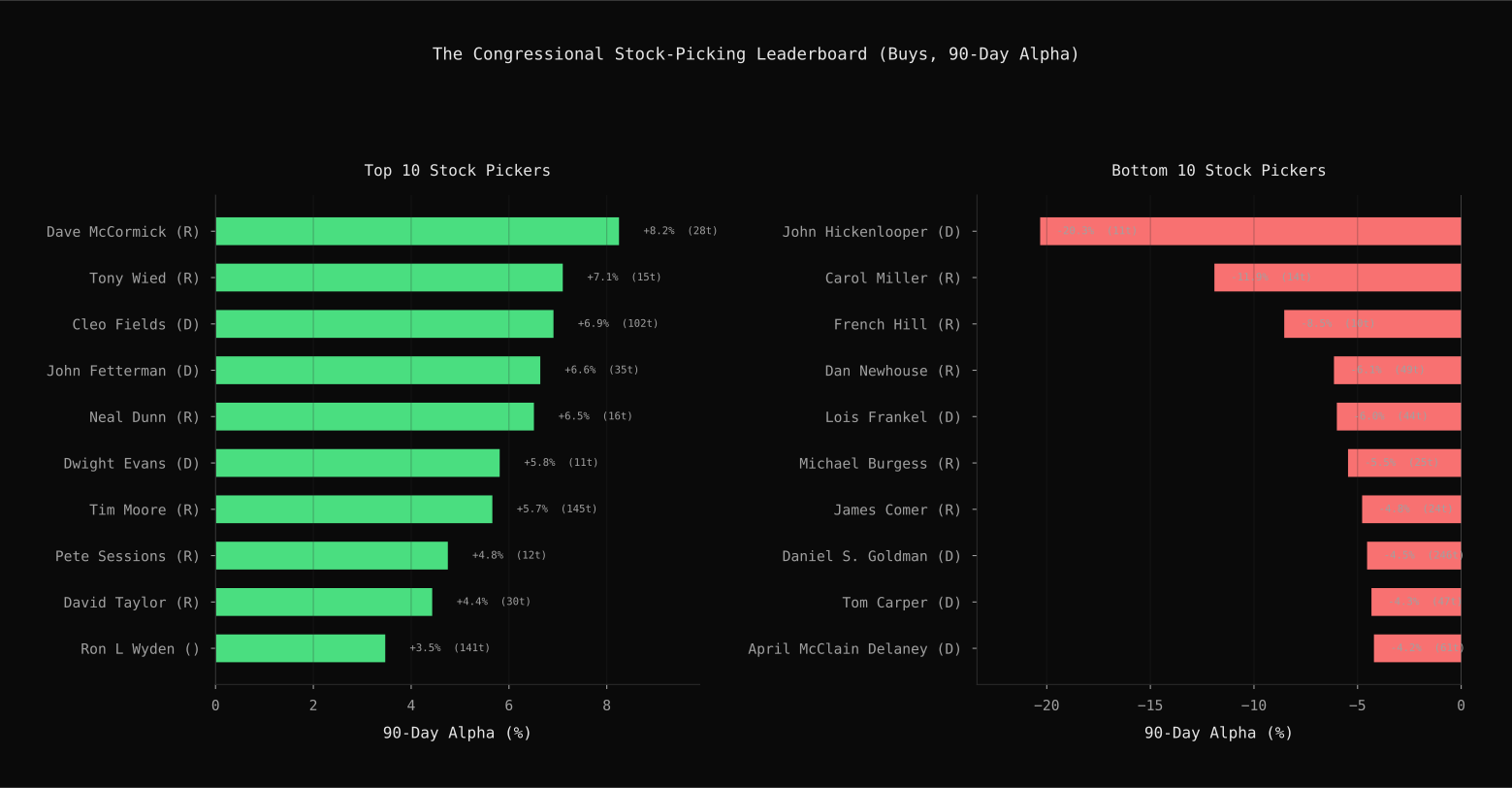
Here, I've categorized the top and bottom stock pickers in Congress. Minimum 10 buy trades to qualify. Alpha is the average 90-day outperformance vs the S&P 500.
| Member | Chamber | Party | 90d Alpha | Trades | Win Rate |
|---|---|---|---|---|---|
| Dave McCormick | Senate | R | +8.25% | 28 | 71% |
| Cleo Fields | House | D | +6.91% | 102 | 56% |
| John Fetterman | Senate | D | +6.64% | 35 | 71% |
| Tim Moore | House | R | +5.66% | 145 | 54% |
| Ron Wyden | Senate | D | +3.47% | 141 | 52% |
| ... | |||||
| Daniel S. Goldman | House | D | −4.54% | 246 | 33% |
| Dan Newhouse | House | R | −6.14% | 49 | 31% |
| Carol Miller | House | R | −11.91% | 14 | 7% |
| John Hickenlooper | Senate | D | −20.32% | 11 | 9% |
Notable: Cleo Fields (D-LA) stands out with 102 trades and +6.91% alpha. Tim Moore (R-NC) has the highest volume among top performers at 145 trades. At the bottom, Daniel S. Goldman's 246 trades at −4.54% alpha make him the most consistently below-average trader in Congress.
The Suspicious Cases
I computed a "Conflict of Interest Score" for each member. Essentially, what percentage of their trades fall in sectors their committees oversee? Then I looked at whether those trades outperformed their non-overlapping trades.
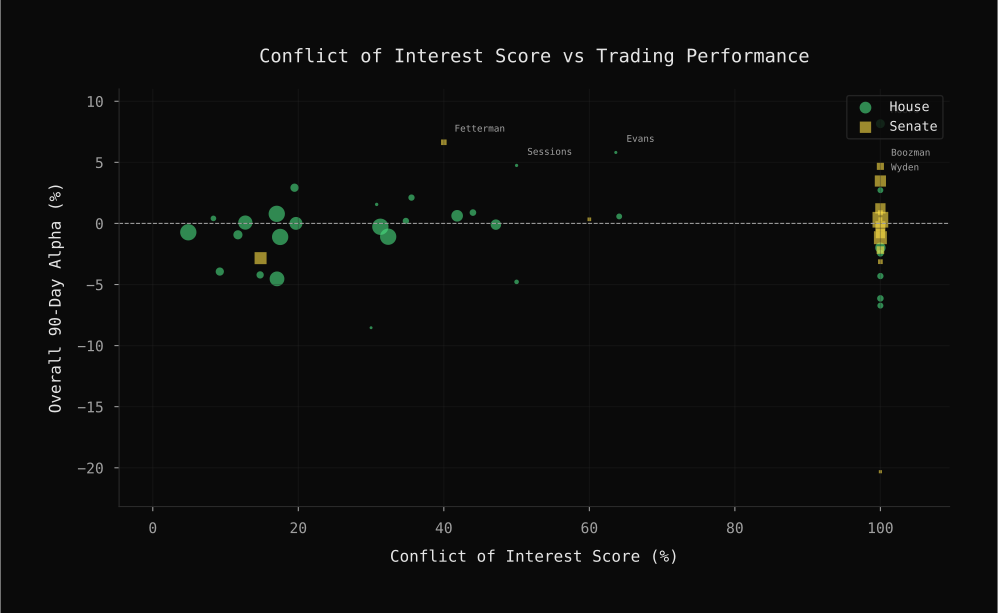
Here are three cases worth noting:
What Does This Mean?
The argument that "Congress is making a fortune trading on inside information" is too simple. According to my findings, members of Congress are mediocre stock pickers. They underperform a basic index fund.
But the committee overlap numbers do raise some concerns. When members trade in sectors they oversee, they do meaningfully better. The gap grows over longer time horizons, which is consistent with an information advantage rather than random noise. Members with high conflict scores and large alpha differentiale are probably worth investigating individually.
None of this proves illegal activity. Committee members naturally have more expertise in their sectors. The STOCK Act doesn't prohibit trading in sectors you oversee. It just requires disclosure. Whether that's sufficient oversight is a policy question, not a data one.
On the contrary, if a hedge fund analyst consistently outperformed the market by 4+ points exclusively in the industry they covered, the SEC would have questions.